
creative practice statement.
Robin North is a visual artist working in digital and film photography, digital printing, and darkroom practices. Because his work is rooted in the history of the lens, he extends his practice through expanded media like photogrammetry and digital installations to bring historical archives into a three-dimensional, immersive space. Through the Center for Black Spatial Memory and Visual Practice, the research and creative platform he founded, North combines archival research, visual anthropology, grounded theory, participatory research, and human-centered design methodologies to reconstruct the histories of the Texas Freedom Colonies, autonomous, post-Emancipation era Black settlements in the rural Gulf Coast region.
Anchored in a tradition where Black history is preserved through ordinary acts of care rather than in formal institutions, North's creative practice prioritizes the co-creation of visual narratives and digital archives with descendant Knowledge Keepers as an evidentiary record for research and creative production. In this way, his work ensures that descendant-held knowledge, historically excluded from conventional settler colonial preservation systems, is not just a subject of study but the very methodology through which he and his collaborators recover and visualize Black placemaking. His objective is to build preservation models that do not depend on the same systems that excluded these communities in the first place.
current project.
Garcitas Freedmen's Community
Deep Roots, Buried Histories
This methodology, North's AI3 framework, grounds his current project, Garcitas Freedmen's Community: Deep Roots, Buried Histories, in which he explores how a Texas Freedom Colony becomes legible through descendant-held archives, extending the Center for Black Spatial Memory and Visual Practice's broader commitment to Black spatial geography and visual practice.
Archival Intelligence examines what exists and what does not in institutional archives, and how these communities are referenced or omitted.
Ancestral Intelligence centers descendant knowledge as the interpretive framework for reading family archives and aligns with post-documentary practice and the ethics of looking, shifting the focus from "this is what happened" to "this is how meaning is constructed around what happened."
Augmented Interrogation translates those findings into creative forms of production that support intergenerational preservation, shifting the focus from simple documentation to narrative reclamation.
This project bridges ongoing site-specific research with a rigorous study of the Brown Hosey Collection, an evolving digital archive of over 7,000 items actively assembled through this process. Housed at Permanent.org and linked to a GIS StoryMap layer, this digital ecosystem brings the project's outputs into a descendant-governed repository.
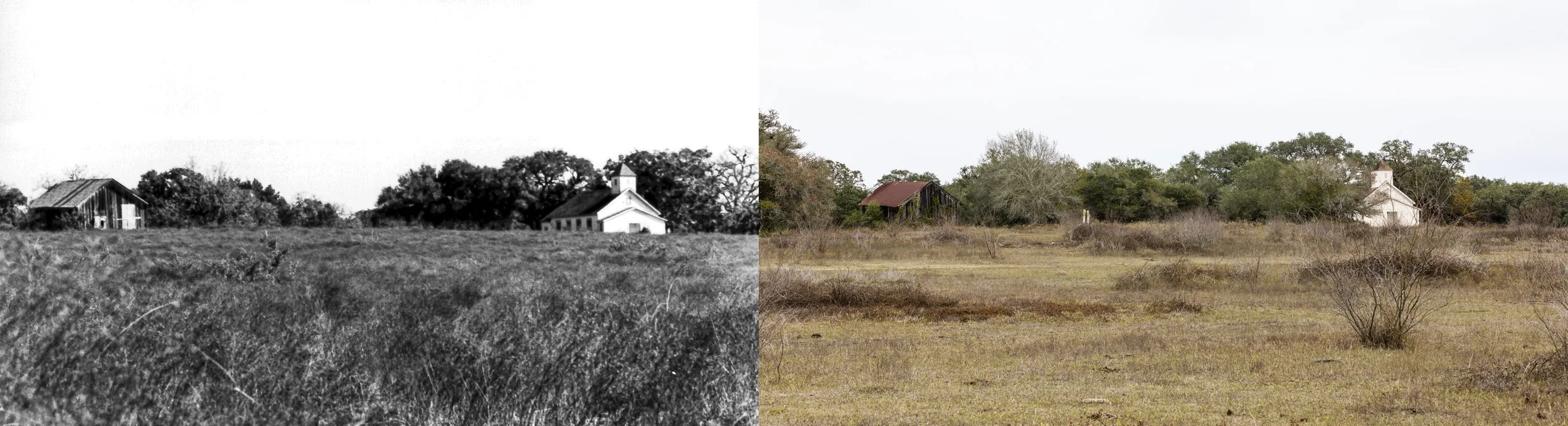
preservation against erasure.
In a moment shaped by revisionist history, where contemporary efforts of erasure intensify the limits of institutional records, North builds preservation models that function outside these systems. His work creates a research path for future generations, ensuring that Freedom Colonies endure as self-governing, recognized chapters of the American landscape.
Because many of these colonies lack standing architecture, his use of photography and expanded media is essential. It allows for the reconstruction of space through memory and visual storytelling, making the invisible visible to historical institutions, funding agencies, and younger generations alike. By translating community evidence into a usable research trail, his creative practice provides the evidentiary weight necessary for historical land markers and resource allocation. Ultimately, this production ensures that whether a colony is currently identified or yet to be found, the tools for its reclamation are ready, so that the hundreds of Freedom Colonies across the Texas landscape endure as self-determined, recognized chapters of the American story.
process & outcomes
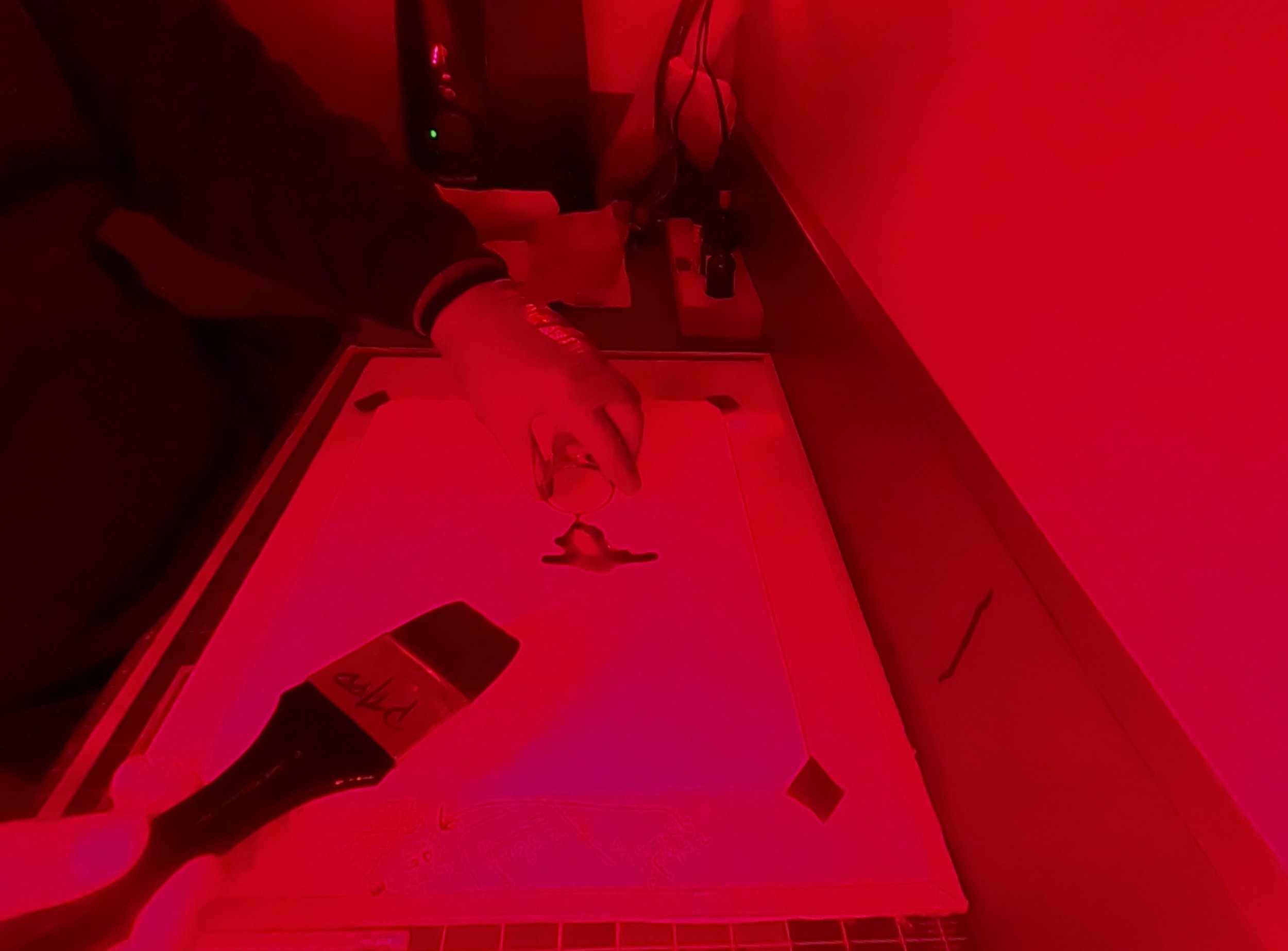
The project establishes the Garcitas Freedom Colony as a place by documenting how it produces evidence through descendant archives. North reconstructs this history through a synthesis of darkroom processes and interdisciplinary tools, beginning with film and alternative printing. This work expands into a digital ecosystem of 3D site models, 360 scans, geolocated story maps, and augmented reality overlays, all designed to return archival knowledge to the land and ensure its usability across generations.
The project produces exhibitions, artist talks, a photobook anthology, a mapped set of cultural sites, and a secured digital archive, with a public exhibition and community workshops.