
about robin j. north
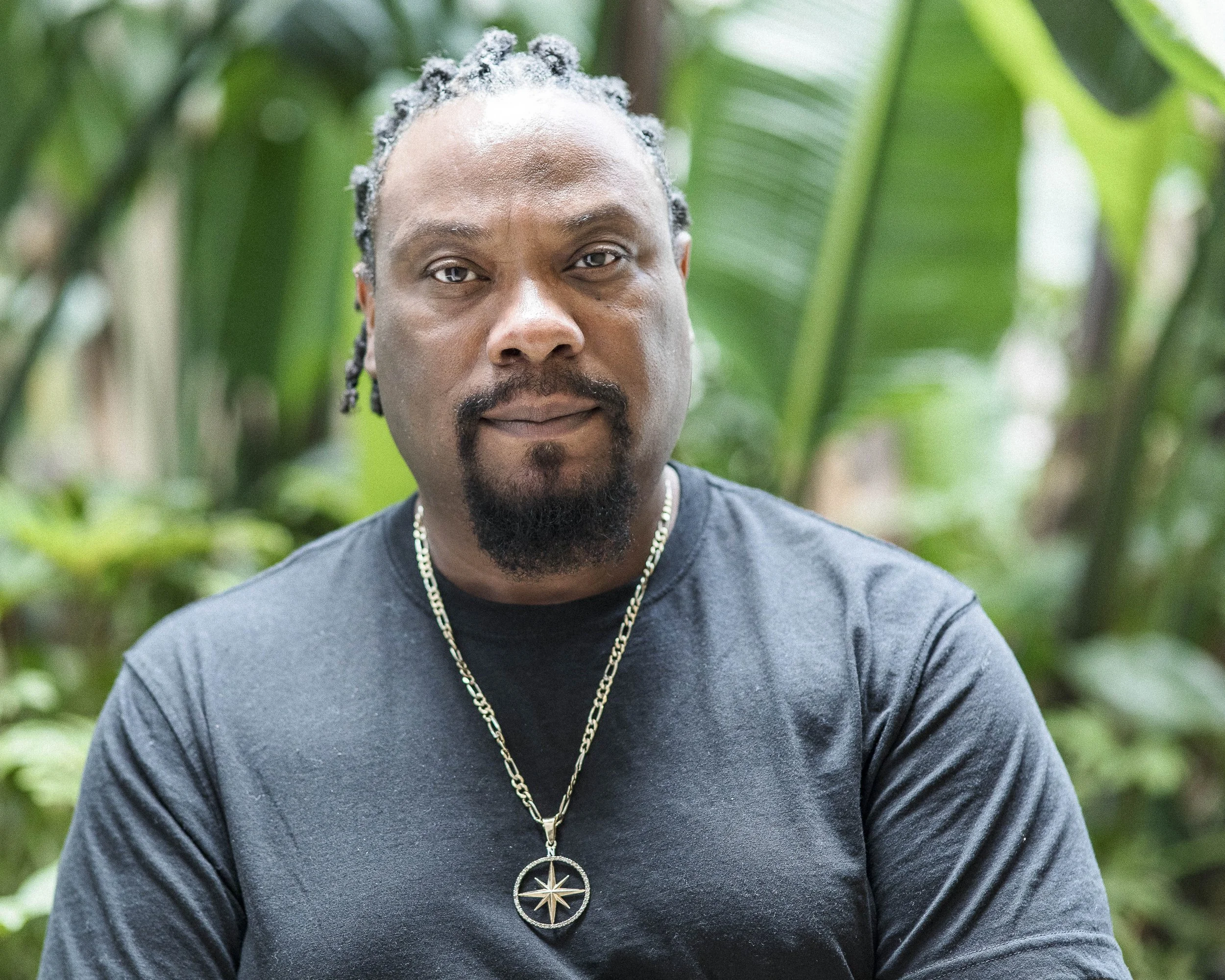
artist statement.
Robin North is a research-based artist working within Black Geographies, a framework for understanding how Black communities make, inhabit, remember, and defend place amid histories of enslavement, segregation, and displacement. His practice investigates the historical narratives of the African Diaspora and Americans of African descent through the intersections of photography, history, and systemic racism, focusing on Texas Freedom Colonies, autonomous Black settlements founded after Emancipation during Reconstruction and the Jim Crow era. Treating descendant-governed archives as both evidence and method, North studies how photographs and related records shape public memory, place knowledge, and historical claims, correcting a public record that has often excluded these communities or reduced the post-Emancipation experience to sharecropping and debt peonage alone. In his research, Freedom Colonies emerge instead as intentional geographies of safety and self-governance, land ownership and community infrastructure asserting autonomy and continuity within landscapes long structured by exclusion.
To guide this research and studio practice, North developed the AI3 framework. Archival Intelligence aligns with darkroom work, film, and alternative photographic processes as material ways of reading and remaking the archive, reframing nineteenth-century techniques and collage layering, in dialogue with the Pictorialist movement, to prioritize cultural memory over scientific objectification. Ancestral Intelligence aligns with post-documentary practice, oral history, and intergenerational collaboration as sources of interpretation and authority. Augmented Interrogation aligns with digital humanities and expanded image tools, including geolocated photography and 360-degree scans converted into 3D models of landscapes and burial grounds, integrating digital methods with traditional processes to preserve spatial evidence.
Rooted in family archives, oral histories, and intergenerational collaboration, North's work brings descendants and future family leaders back to ancestral communities, positioning churches, schools, and cemeteries as cultural infrastructure and spatial records of kinship and collective building. He translates field documentation and archival material into countermapping layers, StoryMaps, descendant-governed digital archives, exhibitions, and photobooks, creating a research trail that descendants can revisit and other Freedom Colonies can adapt to preserve their own histories and enter the public record.
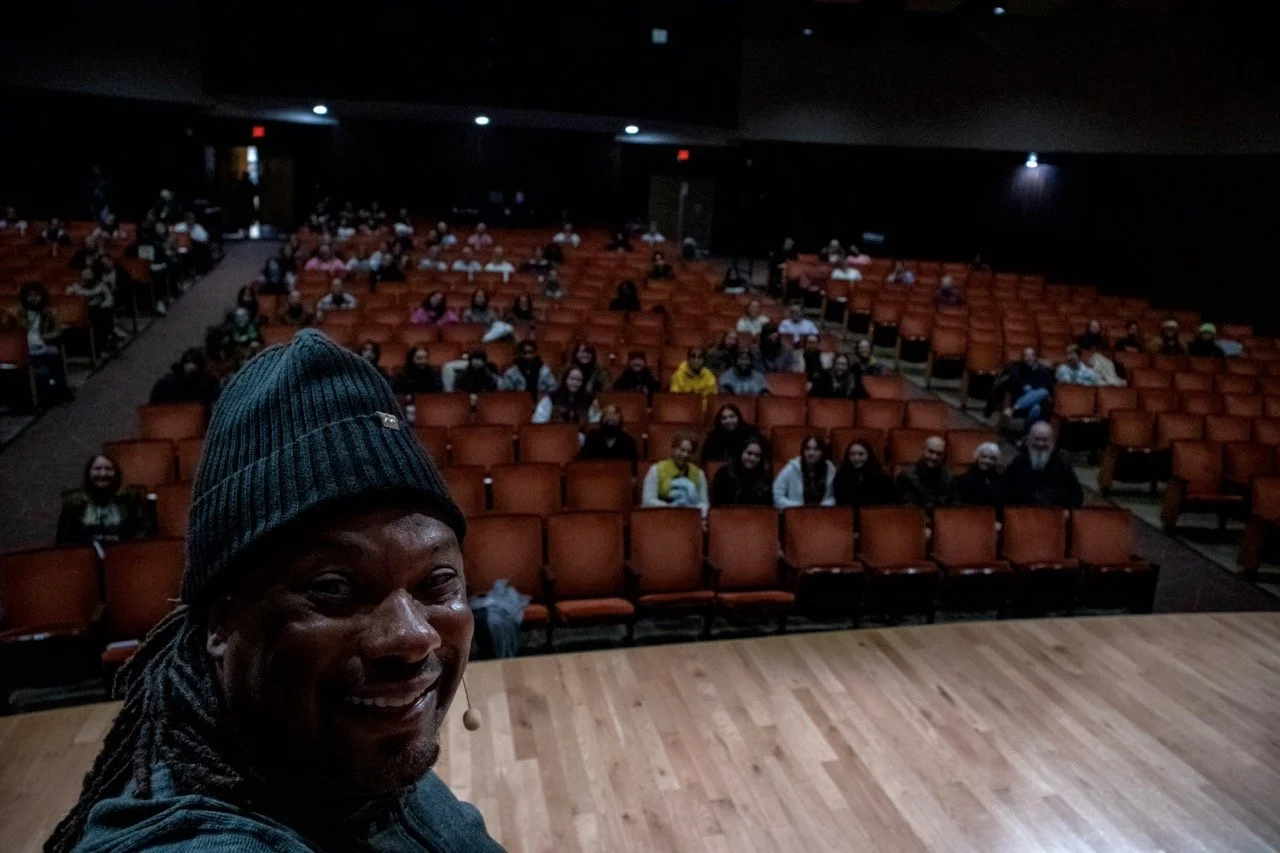
artist bio.
Robin North is an interdisciplinary visual artist, educator, and preservation activist whose research-based practice examines photography as a form of design inquiry into history, systemic racism, the African Diaspora, and the identity of Americans of African descent. His work is grounded in Black Geographies, a field concerned with how Black people make, inhabit, remember, preserve, and define place within landscapes shaped by slavery, segregation, displacement, migration, and resistance. North is the founder of the Center for Black Spatial Memory and Visual Practice, a research and creative platform devoted to preserving Black Geographies through photography, descendant archives, digital mapping, GIS, photogrammetry, LiDAR-based 3D modeling, community-governed interpretation, and preservation activism.
North's current research focuses on Texas Freedom Colonies along the Gulf Coast, autonomous, self-determined communities established by formerly enslaved people and their descendants after Emancipation. Their formation reflects the contradictions of freedom in Texas: General Order No. 3, announced on June 19, 1865, declared enslaved people free while advising them to remain in their present homes and work for wages, and Freedom Colonies represented another response: the pursuit of land, family autonomy, institution building, and the right to define place on their own terms. North examines the tension between Black presence on the land and the systems of exclusion, discriminatory land practices, and uneven public investment that often left these communities absent from official histories, bringing archival records together with descendant knowledge and evidence found in cemeteries, churches, former school sites, roads, waterways, and family land, so that the landscape itself becomes another form of archive.
North developed the AI3 framework (Archival Intelligence, Ancestral Intelligence, and Augmented Interrogation) to guide his research and post-documentary practice, translating archival, ancestral, and spatial evidence into creative forms that support preservation and public access, with preservation activism functioning as a methodological extension of his artistic practice. He is an Assistant Professor of Photography and History of Photography at the University of Colorado Boulder, and previously served as Visiting Assistant Professor of Art at Whitman College. North holds a BFA from the University of Houston and an MFA from San Diego State University.